
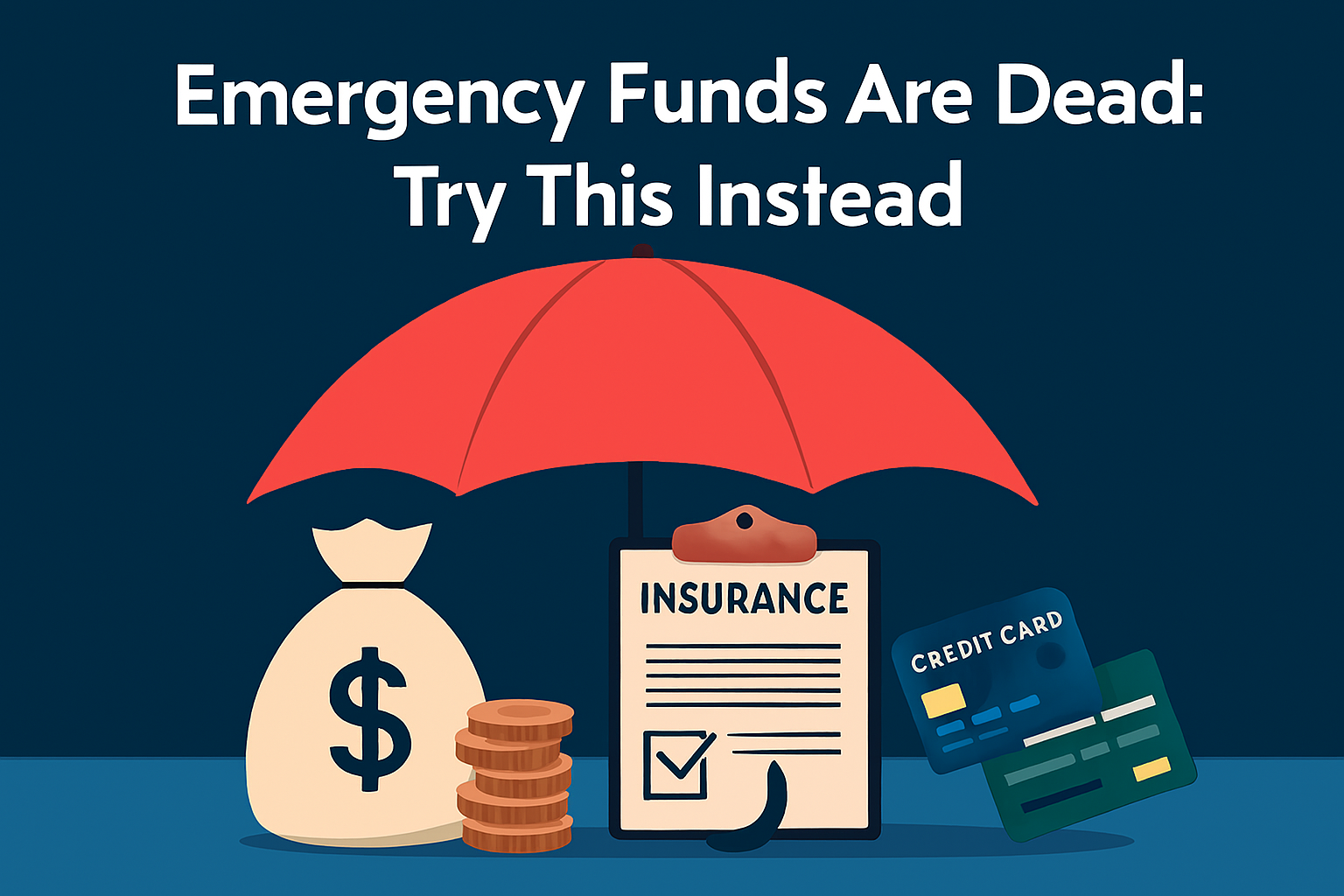
Emergency funds are not obsolete, but many households struggle to build them. Alternatives such as regulated loans, credit lines, insurance, and diversified investments provide faster and more flexible protection.
Why Traditional Emergency Funds Fail
Emergency funds sound simple in theory, but in practice they are often inefficient. Building three to six months of living expenses in cash can take years, and for many households the target is unrealistic. For example, a median‑income family would need tens of thousands of pesos or dollars to meet the standard recommendation, money that could otherwise be used to pay down debt or invest.
Another weakness is opportunity cost. Large sums parked in low‑yield savings accounts lose value over time, especially when inflation outpaces interest rates. Instead of growing wealth, households watch their reserves erode in purchasing power. Many families also carry high‑interest debt while simultaneously trying to save, which is financially counterproductive. Paying off a credit card at 15 percent interest delivers far more value than keeping cash in an account earning 1 percent.
Emergency funds also duplicate protections that already exist. Health insurance, auto insurance, and unemployment benefits are designed to cover many of the same crises. Relying solely on a savings account ignores these built‑in safeguards and leaves households with a lopsided strategy.
Alternatives to Emergency Funds
Traditional emergency funds are useful, but they often fall short when households face rising costs and unpredictable crises. Modern financial tools provide faster access, stronger protection, and more flexibility than a single savings account. The following options show how families can build resilience without relying only on cash reserves.
Regulated Emergency Loans
Regulated emergency loans provide quick access to cash during sudden financial shocks. They are offered by banks or government‑backed institutions with transparent terms and consumer protections. A family facing a hospital bill can use such a loan to bridge costs without draining savings.
Credit Lines and Overdraft Facilities
A personal credit line or overdraft facility acts like a pre‑approved emergency fund. Interest applies only to the amount borrowed, making it flexible and often cheaper than credit cards. A worker can cover car repairs instantly and repay gradually, keeping cash flow stable.
Insurance Policies
Insurance transfers risk away from households by covering large, unexpected expenses. Health, auto, and disability insurance prevent savings from being wiped out during crises. A driver with auto insurance pays only a deductible instead of bearing the full repair cost.
Financial Safety Net
A financial safety net is a structured system that combines cash reserves, borrowing options, insurance, and investments to protect households from both short‑term shocks and long‑term risks. The strength of this net lies in its balance: immediate liquidity for small emergencies, flexible access for medium expenses, and risk transfer for catastrophic events.
Accessible Savings Buffer
Every household benefits from a modest savings buffer that is easy to access. Experts often recommend three months of essential expenses in a liquid account, but this should be tailored to income, lifestyle, and debt obligations. The goal is not to hoard cash indefinitely but to ensure quick coverage for everyday surprises such as utility spikes or minor repairs.
Flexible Credit Options
Savings alone may not be enough, which is why regulated loans and credit lines form the second layer of the safety net. These tools provide liquidity when emergencies exceed cash reserves. The key is responsible use: borrowing only for genuine crises and choosing transparent, regulated products that avoid predatory interest rates.
Insurance Protections
Insurance is the third layer, designed to absorb catastrophic costs. Health insurance covers medical emergencies, auto insurance protects against accidents, and income protection policies safeguard households during job loss. These policies prevent financial collapse by transferring risk away from individuals.
Diversification Through Investments
A modern safety net also includes liquid investments such as certificates of deposit, bond funds, or even conservative stock holdings. These assets grow wealth while remaining accessible, reducing the opportunity cost of keeping large sums in low‑yield accounts. Diversification ensures that households are not overly dependent on cash savings, which lose value over time due to inflation.
Planning and Review
A financial safety net is not static. Households should review their protections annually, adjusting savings levels, insurance coverage, and investment allocations as circumstances change. This ongoing planning ensures the net remains strong and relevant, even as income, expenses, and risks evolve.
Practical Applications
- Medical Emergency: Insurance covers most costs, savings handle immediate fees, and a regulated loan bridges uncovered expenses.
- Job Loss: A savings buffer pays urgent bills, while a credit line sustains longer gaps until new employment, and income protection insurance stabilizes finances.
- Car Breakdown: Insurance covers accident damage, while savings or credit handle repairs outside coverage.
- Natural Disaster: Government grants and community programs supplement savings and insurance, providing relief during recovery.
Emergency funds are not truly dead, but the old model of hoarding cash is outdated. Modern resilience comes from diversified tools including savings, regulated loans, credit lines, insurance, and liquid investments. When combined into a financial safety net, these resources create systems that are faster, smarter, and more realistic than traditional savings accounts, giving households confidence that they can withstand both everyday surprises and major crises.
